
Patient PrepRheum is a podcast series hosted by Naomi Creek, GHLF Australia’s National Coordinator,
who has lived with rheumatoid arthritis for over 40 years.
In this series, Naomi speaks with fellow patients and renowned doctors to explore important and often-misunderstood aspects of living with autoimmune arthritis and related conditions in Australia. Listen to interesting, relevant discussions with people who live with arthritis to help you feel more empowered.
PATIENT PREPRHEUM EPISODES
Check out season one and two of Patient PrepRheum below and wherever you listen to podcasts. Be sure to subscribe for access to future episodes. Tell your family and friends to listen too, so they understand more about what you’re going through.
SEASON 2 – PSORIATIC ARTHRITIS
Psoriatic arthritis (PsA) is a complex condition and one that is frequently underdiagnosed. Around a third of patients living with psoriasis go on to develop psoriatic arthritis, however many of these live with PsA symptoms unaware that they have PsA. Without psoriasis being an indicator for diagnosis, the symptoms of PsA can mimic other inflammatory arthritic conditions such as rheumatoid arthritis and osteoarthritis. A proper diagnosis can take years for some patients.
In this mini-series, we will share a deeper understanding of psoriatic arthritis. We’ll talk with patients about their journeys with the condition, self-management tips and the best ways for them to discuss their treatment options with their doctor.
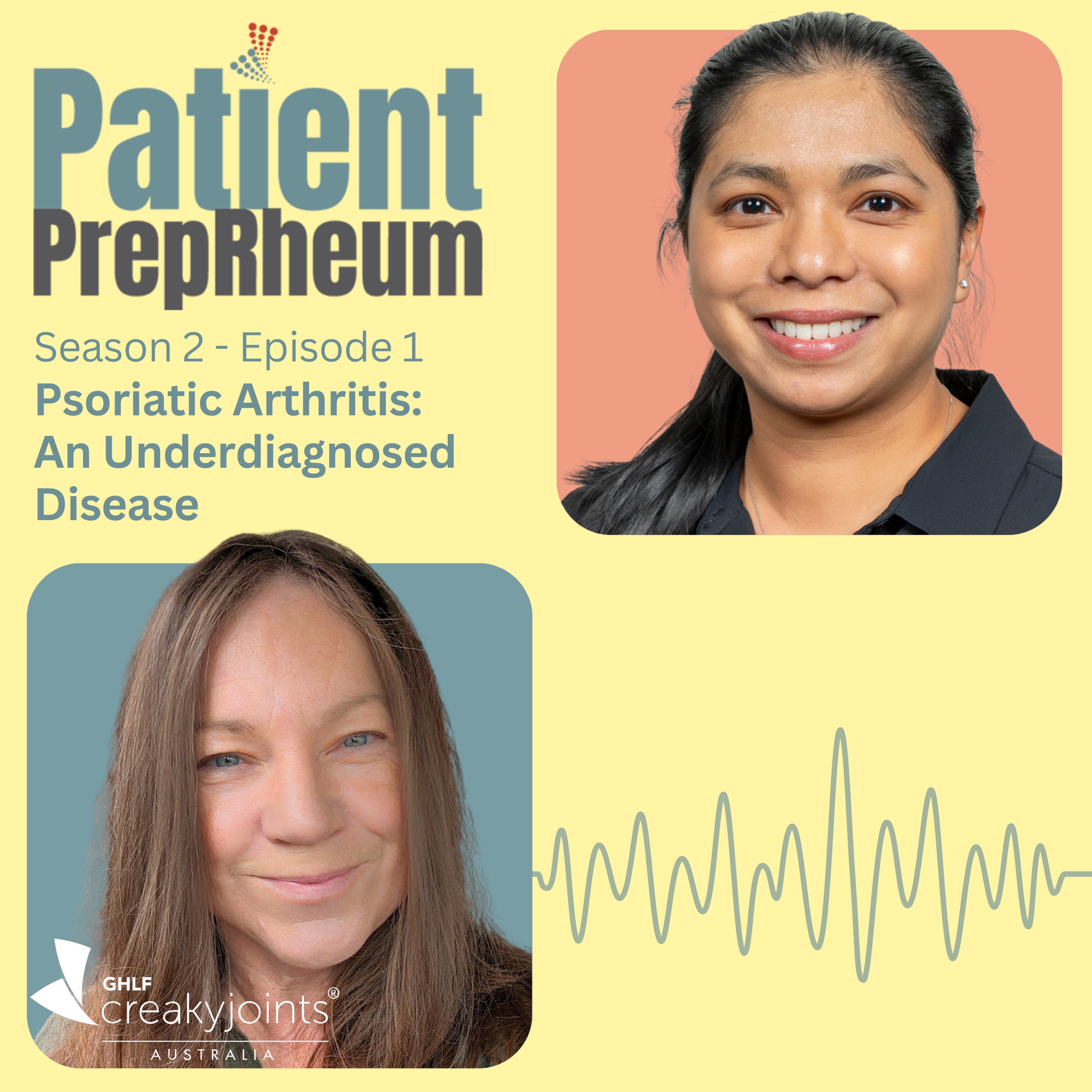
Episode 1: Psoriatic Arthritis – An Underdiagnosed Disease
In this episode, we talk with Dr Premarani Sinnathurai, a specialist in the Rheumatology Department at Royal North Shore Hospital and Clinical Senior Lecturer at the University of Sydney. She was awarded her PhD from the University of Sydney in 2019 on Comorbidity and Patient-Centred Health Outcomes in Psoriatic Arthritis. Her research focuses on the role of comorbidity and adiposity on outcomes in psoriatic arthritis. Her clinical work includes specialist psoriatic arthritis clinics in addition to general rheumatology and acute referral clinics.
Dr Sinnathurai discusses the complexities of psoriatic arthritis, including inflammation in joints, tendons and skin and the challenges of diagnosing the condition. We learn about the importance of early diagnosis and appropriate treatment as well as the comorbidities associated with psoriatic arthritis. We also hear about the various medications and lifestyle changes that can help people manage the condition, highlighting the importance of individualised approaches based on patient priorities and patient-doctor partnerships.
Episode 2: Patient Journeys and the Road to Diagnosis
In this episode, Naomi is joined by two patients. Kay Boucker is from New South Wales and was diagnosed with psoriatic arthritis in 2013. Kay lived with psoriasis for many years before experiencing other symptoms like fatigue, tendon pain and uveitis. She said it took her GP a long time to be convinced about her PsA symptoms but she was finally referred to a rheumatologist. Kay also lives with type 2 diabetes and depression and says singing is her happy pill for helping her through life’s challenges.
Naomi’s second guest is Andrea McMahon from South Australia. Andrea was diagnosed with rheumatoid arthritis, Sjogren’s syndrome and fibromyalgia in 2010. Then, four years ago, she presented to her rheumatologist with new symptoms of splitting nails and lower back pain. Shortly after that she was diagnosed with psoriatic arthritis. The ups and downs in her journey have taught her patience, pacing and resilience. Andrea remains optimistic for her future and continues her life with as much activity as she can.
Kay, Andrea and Naomi share their experiences and insights on managing psoriatic arthritis and living with chronic illnesses. They emphasise the importance of lifestyle factors, seeking knowledge, and finding support systems. Kay and Andrea discuss the impact of their conditions on their daily life, while offering practical advice and personal anecdotes to help others navigate the challenges of living with chronic conditions.
Episode 3: Psoriatic Arthritis – Self-management and Getting on With Life
In our third episode, Naomi is chatting with Simone Bye from New South Wales, who lives with psoriatic arthritis. Simone was diagnosed in 2018 and is a mum of two young children. She says the hardest part of her journey has been trialling and medically failing so many treatments, which has made it difficult to be the parent she wants to be for her kids. Despite these challenges, she is doing her best to manage her condition and get on with life.
Naomi is also joined by Sarah Comensoli from BJC Health in Sydney. Sarah has several roles there as a director, head of marketing and manager of the allied health team. She has been practising as an Accredited Exercise Physiologist since 2008 and has worked in a number of clinical and gym settings since then. Sarah has been instrumental in building the Exercise Physiology service at BJC Health to be one which is unmatched in delivering care to those with rheumatic disease.
Sarah shares her expertise in working with rheumatology patients and says there is no “one size fits all” approach in helping people keep fit and healthy. She explains how tailoring an exercise program is the key to success in getting patients engaged in better lifestyle habits. Simone discusses some of the ways her allied health team are helping her integrate techniques into her daily life so she can function more efficiently, physically and mentally.
SEASON 1
Episode 4: Methotrexate; Management, Myths and Milestones
In this episode, we’ll be talking about methotrexate and clarifying how it is used in rheumatology settings. Methotrexate is one of the main medications used to slow or stop the progression of autoimmune arthritis and reduce disease activity.
We’ll hear from Janine Fisher, a patient who has lived with rheumatoid arthritis for 31 years. Janine shares her journey with methotrexate, starting with her initial concerns about taking it. She has tried various other treatments over the years and now uses methotrexate successfully in combination with a biologic medication to manage her condition.
Rheumatologist, Dr Irwin Lim will explain why methotrexate is widely used as a front-line treatment for many forms of autoimmune arthritis. He will also explain how it can safely be used by most people and dispel the myths that have developed around it.

Episode 3: Improving Patient/Doctor Communication
In our third episode, Naomi learns some top tips from fellow patient Sarah Clark about having good communication with your doctor. Sarah tells of her rocky start with her initial diagnosis and early treatment until she found a specialist who really listened to her. Rheumatologist, Dr David Liew shares some wonderful insights and what helps him provide the best care possible to his patients. Click info button for full description and transcript.
Episode 2: Accessible Medication Through the TGA & PBS
In episode 2, we hear from Janine Monty, who lives with multiple autoimmune conditions. Janine shares why having access to a large range of affordable medicine is key to her being able to manage her everyday life. Rheumatologist Paul Bird explains the important role the Therapeutic Goods Administration (TGA) and Pharmaceutical Benefits Scheme (PBS) play and how patients can have a say in improving access to a medicine. Click info button for full description and transcript.
Episode 1: The Next Step with Biosimilars
In our premiere episode, we’ll be talking about biologic medicines and biosimilars. These are medicines that are used to slow or stop the progression of autoimmune arthritis and reduce disease activity when conventional tablet-form medications aren’t working well enough for you. We’ll hear from Ann-Laherty-Hunt, a patient with RA and from Rheumatologist Dr David Liew. Click info button for full description and transcript.
PATIENT PREPRHEUM AUDIO GUIDES
Want to learn more about these topics? We’ve taken the hard work out for you by summarising all the important facts and packing them into short, easy-listening podcasts. Breeze through these mini-presentations and come out with a whole lot of knowledge! Check them out below and be sure to subscribe for access to future episodes.
OUR LATEST AUDIO GUIDE
Audio Guide 4: Methotrexate
Learn more about the medication Methotrexate in this short audio guide that accompanies Episode 4: Methotrexate – Management, Myths and Milestones. The guide gives an overview of Methotrexate and delves deeper into how the medication works, how it is used and its side effects.Click info button for transcript.
Audio Guide 3: Improving Patient/Doctor Communication
Listen to helpful tips for patients and doctors to bridge the gap between patient and doctor. Click info button for transcript.
Audio Guide 2: Medicine Approval and Access in Australia
Learn more about the role of the Therapeutic Goods Administration (TGA), the Pharmaceutical Benefits Advisory Committee (PBAC) and the Pharmaceutical Benefits Scheme (PBS). Click info button for transcript.
Audio Guide 1: Biosimilars
Learn more about biosimilars – what they are, how they are made and why they are an important treatment option for patients to consider. Click info button for transcript.

YOUR HOST
Naomi Creek,
National Coordinator, GHLF Australia
Naomi’s role at GHLF Australia is to coordinate education, advocacy and support activities for their patient and carer community. She works closely with patient groups, health care organisations and health care professionals, as well as the GHLF global office to identify Australian community needs, so her team can create relevant and helpful resources.
Naomi’s personal experience of living with rheumatoid arthritis since the age of 12 has made her a passionate advocate for others living with arthritis and chronic conditions. She believes patients must have access to the right resources to understand their condition and feel empowered to manage their own health. Naomi has an extensive background as a patient representative and volunteer community leader, including leading the Young Women’s Arthritis Support Group (YWASG) for 10 years in Melbourne and being a board director and community speaker at Arthritis Victoria.
MORE RESOURCES
Here’s a sample of some of resources found on our website. Be sure to visit often to see the latest offerings.
10 Things to do After an Arthritis Diagnosis: Top Tips From Patients
You’ve just found out you have arthritis. Now you need to know how to live with it. These practical tips will help you get started.
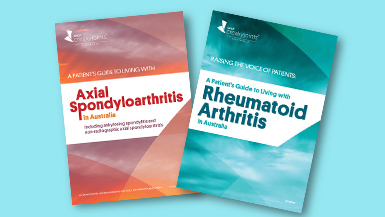
Patient Guidelines for Living With Arthritis
These patient guidelines offer detailed, accessible explanations of symptoms, treatment options, integrated medicines and therapies, diet and exercise, as well as how to talk to family and friends about your condition.

Government Support for People With Chronic Illness
Are you searching for government pensions and benefits for Australians with chronic health conditions? We’ve listed the most common ones here.

Patient Stories
We’ve devoted this page to your personal stories so you can read about other people’s experiences and learn from them. We hope they will help you feel less isolated and that they will validate your own feelings and concerns.

Living With Arthritis During Covid-19
We’ve sourced the latest information from the Australian Government, the Australian Rheumatology Association and a selection of other official and reputable sources to bring you important resources to live well through Covid-19.

Choosing Your HealthCare Team
Choosing your own healthcare team will help you gain a better understanding of your condition, assess which treatments are right for you and help you manage your health more effectively.





Patient PrepRheum is a podcast series produced by the non-profit Global Healthy Living Foundation, its arthritis patient community CreakyJoints Australia, and made possible with support from our generous sponsors.